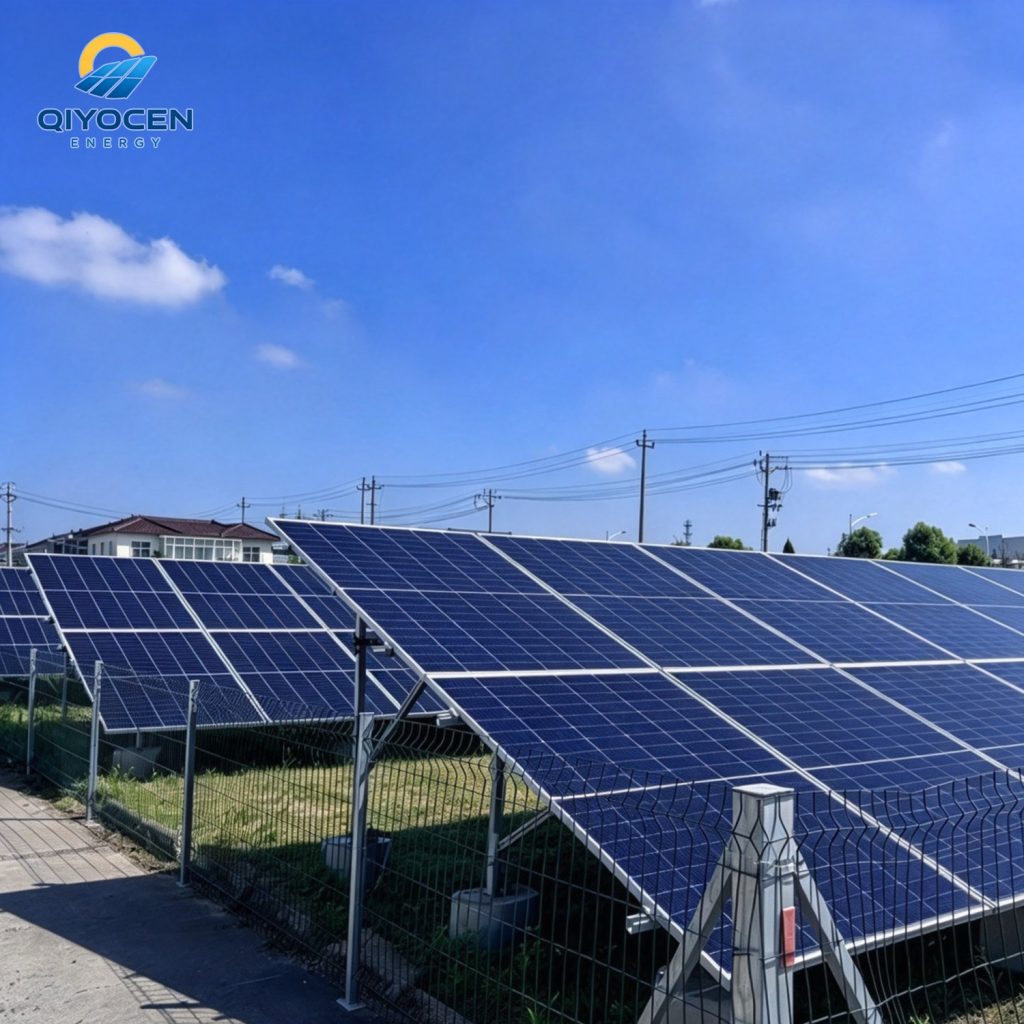
As renewable energy continues to expand worldwide, energy storage is becoming an essential part of modern power systems. Although solar energy is clean and sustainable, its generation depends on sunlight, weather conditions, and seasonal changes. Battery energy storage systems help balance electricity generation and consumption, improving the overall utilization of solar power.
A typical solar battery storage system consists of PV modules, a hybrid inverter, lithium batteries, and related electrical equipment.
During the day, electricity generated by solar panels can directly supply household or commercial loads. Excess energy can be stored in batteries for later use. At night or during grid outages, stored electricity can be discharged to support connected loads, depending on the system configuration.
Lithium iron phosphate (LiFePO4) batteries are widely used in residential and commercial energy storage applications because of their cycle performance, safety characteristics, and service life.
When selecting an energy storage system, several factors should be considered, including battery capacity (kWh), inverter power (kW), backup duration, charging and discharging capability, and system compatibility.
It is important to understand that battery capacity and inverter power are different specifications. Both should be carefully matched to the actual electricity demand.
QIYOCEN ENERGY provides solar inverters, lithium batteries, and integrated solar energy storage products for residential and commercial applications.
We aim to help customers build more flexible, efficient, and reliable energy systems for the future.